
Written by:
Updated on:
Reading time:

Need some information?
Autumn weed control: why choose thermal weeding?
The perennial cycle: weakening roots before winter
As winter approaches, unwanted perennial weeds slow down their surface growth, but a crucial phenomenon is happening underground: they concentrate their energy to store maximum nutrients and reserves in their root systems. It is thanks to these reserves that they will survive the winter and bounce back even stronger in the spring.
Intervening in autumn with a thermal treatment disrupts this storage cycle. By delivering a thermal shock to the plant’s aerial parts, it is forced to draw on its nascent reserves just to try and regenerate, which durably exhausts it before its dormant period.
In summary :
On the ground, groundskeeping is often driven by the rush of spring and summer, when vegetation explodes. Yet autumn is when a large part of the success in maintaining roads, pathways, and public spaces for the coming year is actually decided.
For local authorities and professionals, mastering autumn weed control and adopting a late-season strategy provides a head start. Let’s look at the concrete reasons that make this period so strategic.
Blocking seed dissemination and reducing future pressure
Autumn also marks the final fruiting phase for many annual weeds. Leaving vegetation to go to seed at the end of the year involuntarily enriches the stock of seeds present in the soil.
By carrying out a methodical cleaning pass before the first frosts, you eliminate the last dissemination hotspots. The result: the pressure from spontaneous vegetation is significantly lower from the very first warm days of the following spring, which drastically reduces the labor time needed for early-season rounds.
Optimal ground conditions and controlled scheduling
Unlike periods of intense summer heat, often marked by water restrictions that penalize the use of water or steam solutions and by fire risks requiring increased vigilance, autumn offers more temperate weather conditions. The ground remains accessible and technical teams can plan their work with peace of mind outside of peak park attendance periods.
Furthermore, our Ripagreen® thermal weeding solutions can be used in the rain. This offers a double advantage: operators are not held up by the weather in their weeding tasks, and the thermal shock is even more significant.
Relying on thermal weeding for clean, sustainable efficiency
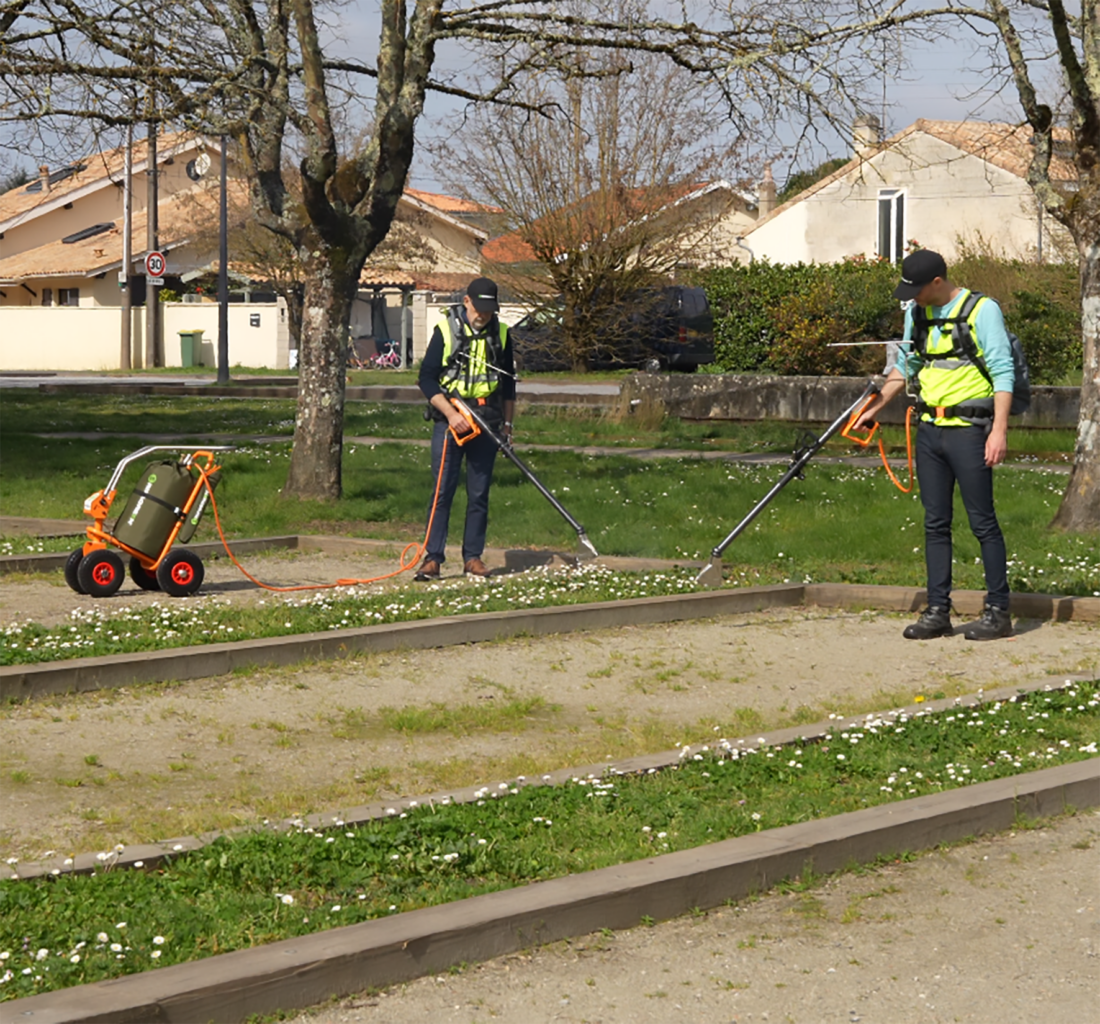
As part of the ecological transition and stricter restrictions on phytosanitary products, thermal weeding stands out as an obvious solution for these end-of-year projects. Unlike chemical approaches subject to strict regulatory constraints, thermal treatment via hot air acts immediately, without chemical residues or soil disruption. For field teams, equipping themselves with high-performance professional solutions like Ripagreen® equipment makes it possible to quickly treat curbs, walls, and stabilized roads safely and without awkward postures.
Conclusion
Green spaces maintenance doesn’t stop at winter’s door. By making autumn weed control a strategic reflex, local authorities ensure cleaner spaces, durably weakened perennials, and a lightened workload as soon as warmer weather returns. A winning anticipation on every front.
👉 Want to equip your technical teams for end-of-year projects ?
Contact our teams to discover our professional solutions.
Share this article

Sur le même thème


Besoin d’informations, une question ?
Notre équipe dédiée vous répondra dans les plus brefs délais.