
05Apr2024
LAUNCH OF THE WEEDING SEASON
The warm weather is here, and the weeding season is starting! To help you get started, we’re offering a range of promotional offers* valid from March 15 to April 30 […]

Thermal weeding is increasingly popular among municipalities, landscapers, and professionals responsible for maintaining outdoor spaces. As an effective alternative to phytosanitary products, it fits perfectly within zero-chemical and sustainable management approaches.
However, a common misconception persists: to be effective, weeds must be burned until they turn black.
In reality, this is false.
Worse still, this practice can reduce the effectiveness of thermal weeding. So, should plants really be burned? How does this method actually work? And most importantly, what is the right approach in the field?
Here’s everything you need to know.
A common misunderstanding about thermal weeding
In the collective imagination, “thermal weeding” is often associated with visible flames and charred vegetation. This perception comes from older methods or certain equipment using a direct, flexible, and long flame, typical of traditional burners.
As a result, many users believe they must continue until the plant visibly burns for the treatment to be effective.
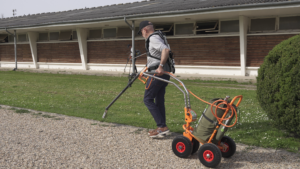
Thermal weeding developed with Ripagreen technology does not aim to burn the plant, but to induce thermal shock by heating it to a high temperature, enough to destroy it. Its pulsed hot air technology produces a short, rigid flame combined with a blade of hot air. The heat is directed toward the ground in a powerful flow, unlike conventional burners. As a result, a quick pass of 2 to 3 seconds at 20 cm from the plant is enough to burst the plant cells.
The real principle: rapid thermal shock
The operation of thermal weeding is both simple and highly effective.
When a plant is exposed to intense heat for a short period:
• plant cells burst
• cell walls break down
• sap can no longer circulate properly
Result: the plant dries out and gradually dies.
This process occurs well before any visible combustion. In other words, trying to burn the plant is unnecessary and even counterproductive
How to check if the treatment is effective
Contrary to popular belief, the effectiveness of thermal weeding cannot be judged by immediate visual appearance.
A plant may appear intact right after treatment, but in reality, it is already doomed.
The right approach is to observe the texture of the leaves:
• they become dull
• they lose rigidity
• they take on a slightly wilted appearance
A simple test is to press a leaf with your finger after treatment: if your fingerprint remains visible, thermal shock has occurred.
Conversely, a blackened or charred plant indicates that you have applied too much heat.
Why burning weeds is a mistake
Trying to burn plants presents several major drawbacks.
A waste of time
Spending more time on each area significantly slows down the work. On large surfaces, this directly impacts productivity.
Excessive gas consumption
The longer the exposure time, the higher the energy consumption, without any real gain in effectiveness.
Increased risks
Excessive heat can damage:
• surfaces (asphalt, paving stones)
• street furniture
• edges and sensitive elements
It also increases risks for the operator and the surrounding environment.
Misleading effectiveness
Burning the visible part of the plant does not guarantee better destruction of the roots, especially for perennial species.
In thermal weeding, efficiency is not measured by the flame, but by control of the technique, an approach perfectly embodied by Ripagreen technology.
You may also be interested in
The warm weather is here, and the weeding season is starting! To help you get started, we’re offering a range of promotional offers* valid from March 15 to April 30 […]
The return of fine weather also means the return of weeds. Depending on the region, the thermal weeding season is starting or has already started, and it’s essential to get […]
The year coming to an end has been especially rewarding for Ripagreen. More than ever, our teams have been out in the field, close to industry professionals, to meet, listen, […]