02Apr2021
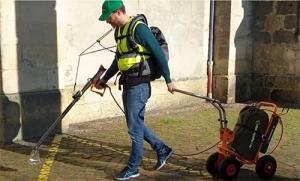
Effective weeding on your own ?
Our Ripagreen® research and development teams have studied all the specifications of a person who would like to weed a fairly large area, quickly and above all to be able […]

In the context of thermal weed control, gas cylinder storage is a major issue. Poor organization or failure to follow safety instructions can expose people, facilities and goods to serious risks. This is why implementing strict rules and best practices is essential.
RIPAGREEN, committed to the maintenance of green spaces and to supporting municipalities, aims to ensure the safe, controlled and sustainable use of gas cylinders at storage sites.
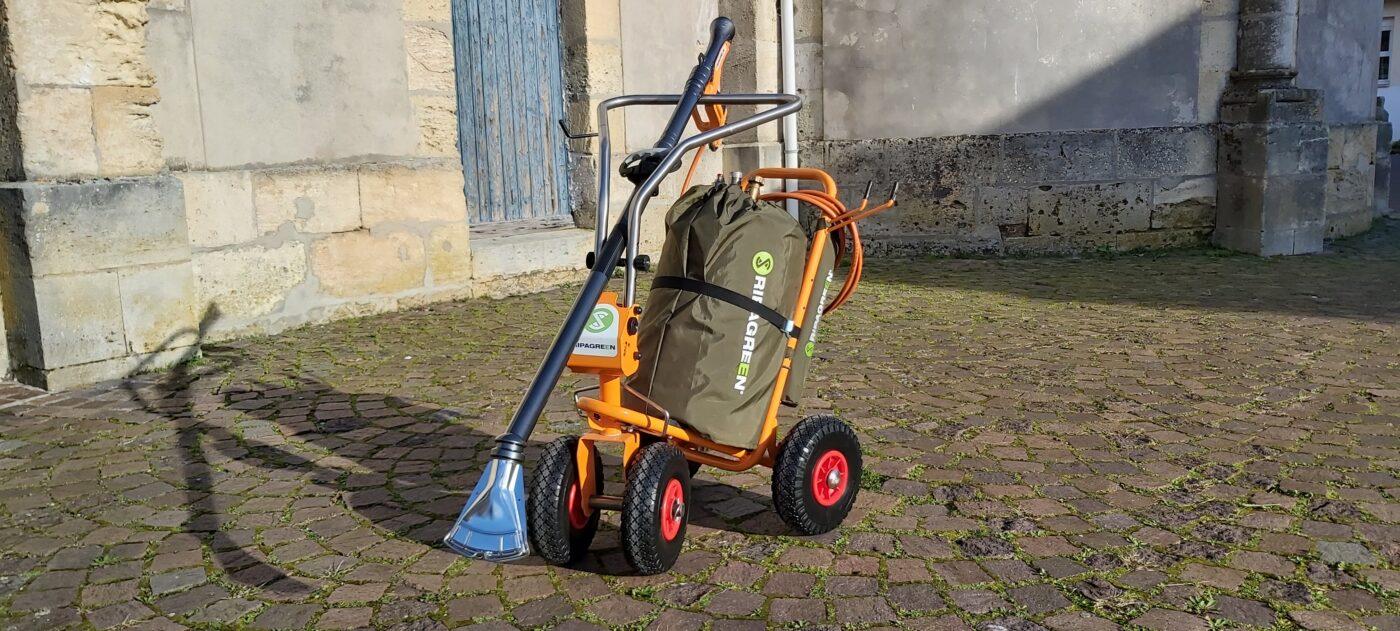
Gas cylinders contain compressed or liquefied gases, such as propane or butane, commonly used in professional environments. Like any pressurized equipment, they require proper handling: in the event of a fall, leak or exposure to a heat source, incidents may occur. However, following best practices for storage, transport and use ensures safe and controlled daily operation.
To limit these risks, regulations require in particular:
These measures aim to prevent incidents and ensure the safety of employees in the workplace.
Before any storage operation, it is essential to know the exact nature of the gas contained in each cylinder:
Each category has specific constraints. For example, gases heavier than air, such as propane, must never be stored in basements. In the event of a leak, they can accumulate at ground level and create a dangerous or even explosive atmosphere.
Gas cylinders must be stored in an appropriate environment:
Whenever possible, outdoor storage or storage in a dedicated room remains the safest solution.
The storage area must be easily recognizable thanks to:
This organization limits risky behavior and facilitates compliance with safety instructions.
To reduce the risk of accidents, gas cylinders must always be:
This positioning prevents the release of liquid gas and significantly reduces the consequences of a potential leak.
Even a so-called “empty” cylinder may still contain residual gas. It is therefore imperative to:
Rigorous flow management improves both safety and logistical efficiency.
Safety depends not only on equipment, but also on the people who use it. Anyone required to handle gas cylinders must be trained in:
The use of personal protective equipment (gloves, safety shoes) is essential. The use of cylinder trolleys also helps reduce the risk of falls and excessive physical effort.
Gas cylinder storage is a subject that should never be taken lightly. By applying safety rules, training teams and implementing appropriate solutions, organizations reduce risks while improving their day-to-day operations.
You may also be interested in
Our Ripagreen® research and development teams have studied all the specifications of a person who would like to weed a fairly large area, quickly and above all to be able […]
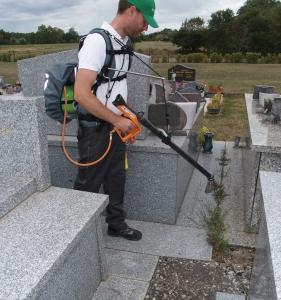
Weed control in areas such as cemeteries can be more complex than it seems. Indeed, we can encounter different types of obstacles, restricted spaces or legal constraints. Indeed, when it […]
Thermal weeding is now established as a sustainable, chemical-free solution for maintaining public and private spaces. At Ripagreen®, safety of use is a central pillar of our technology. Thanks to […]